PAINTRANGER
CLAUDIA SCHMIDT
Mixed-media artist based in Germany
Selected works, 2026
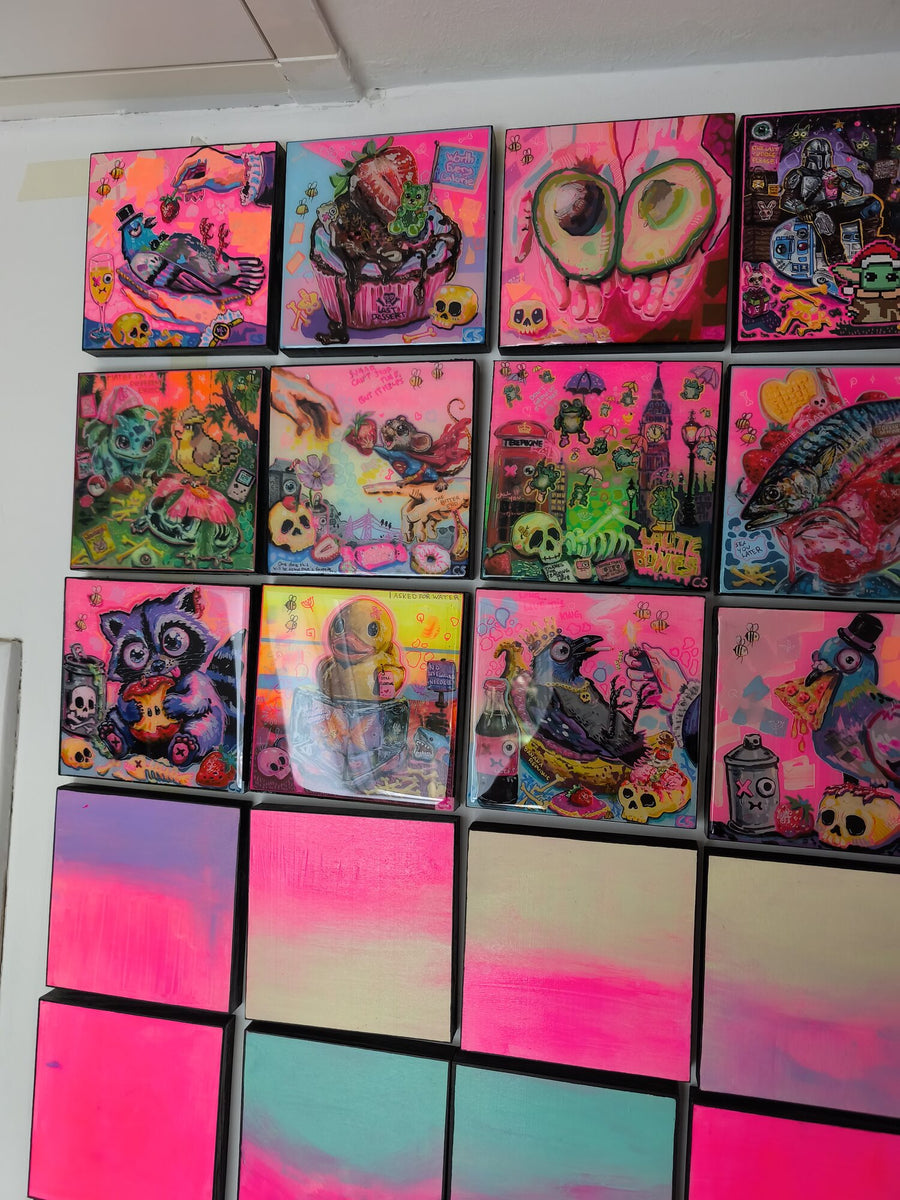
My name is Claudia Schmidt, and I work under the artist name Paintranger. My work sits in the orbit of Pop Surrealism and Lowbrow, with saturated colour, dark humour, recurring characters and imagery that can feel playful and unsettling at the same time. Within that broader context, I developed Candy Decay as a visual language of my own, exploring the strange coexistence of joy and impermanence.
The work moves between contemporary painting, illustration and character-driven storytelling. At the centre is a simple idea: everything ripens, everything rots. And there is still a lot worth celebrating in between.
Selected works


CANDY DECAY ART STYLE
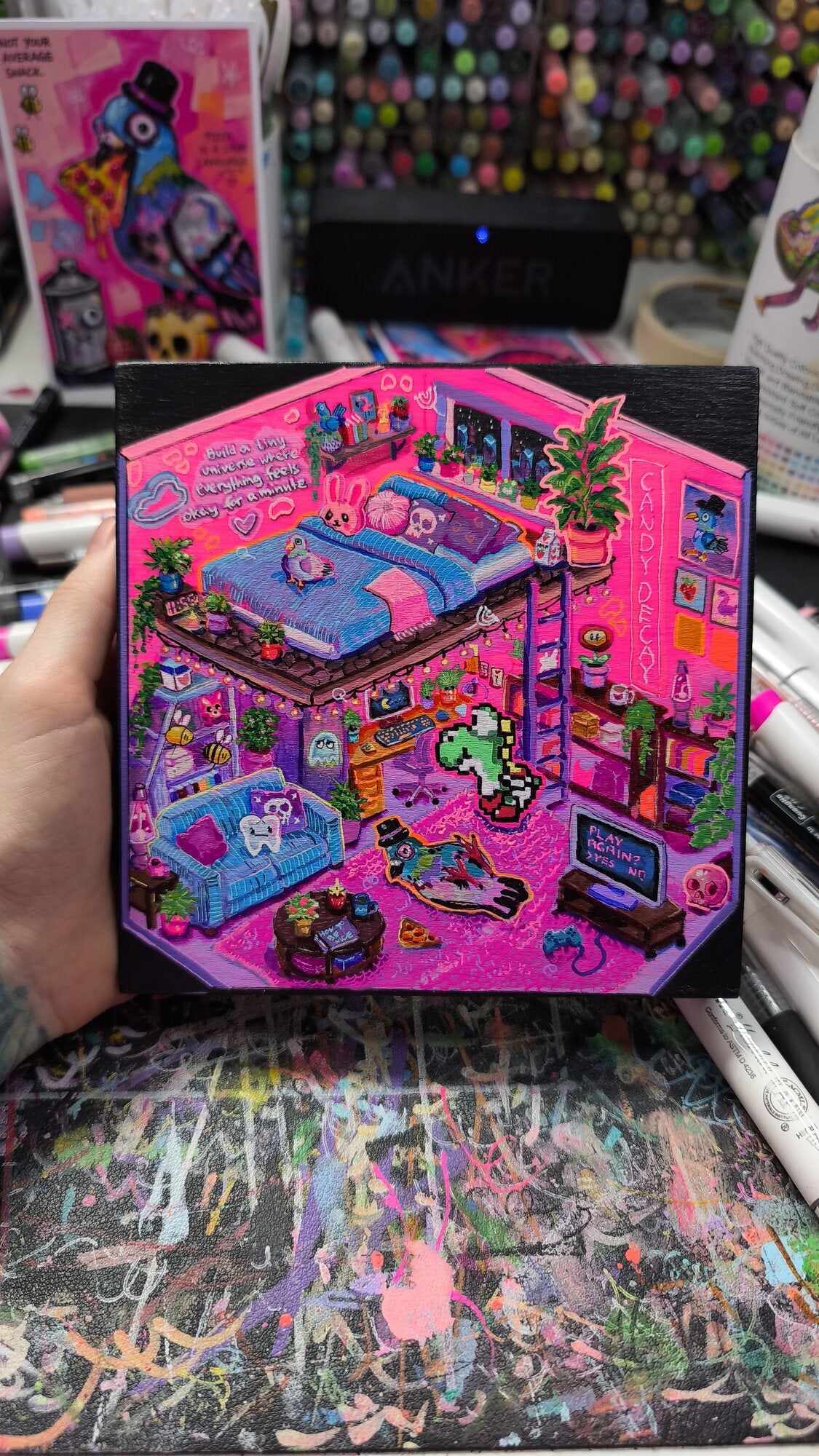
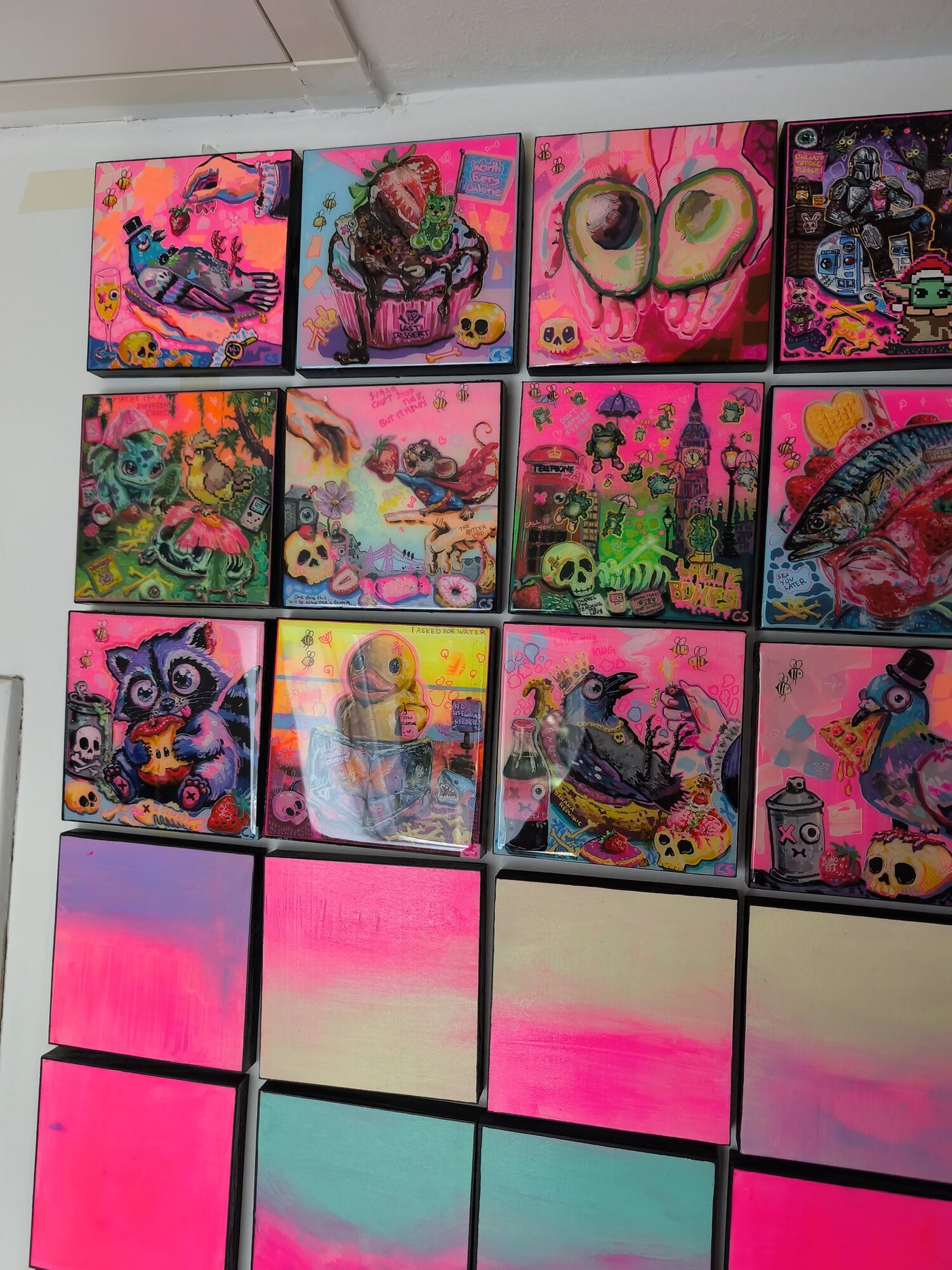
Candy Decay is an art style I developed from years of experimenting across different media and visual languages. It is built around one central idea: everything ripens, and everything rots. The paintings hold both at once, pleasure and decay, without letting either cancel the other out.


Recognising Candy Decay
Candy Decay is not a style applied to unrelated paintings. It is a world the works keep returning to, and each new panel extends it.
The same cast reappears: scavengers, pigeons, strawberries, skulls, cheap sweets, things somebody threw away. Placed together they stop reading as separate motifs and start reading as vocabulary, a set of terms for pleasure that does not last and affection for what is already spoiling.
Pigeons having a romantic candle light dinner next to a bunch of trash in NYC Central Park. A goldfish is frozen mid-swim inside a melting ice cube. These are not jokes about death. They are ways of sitting with it while the colour is still bright.
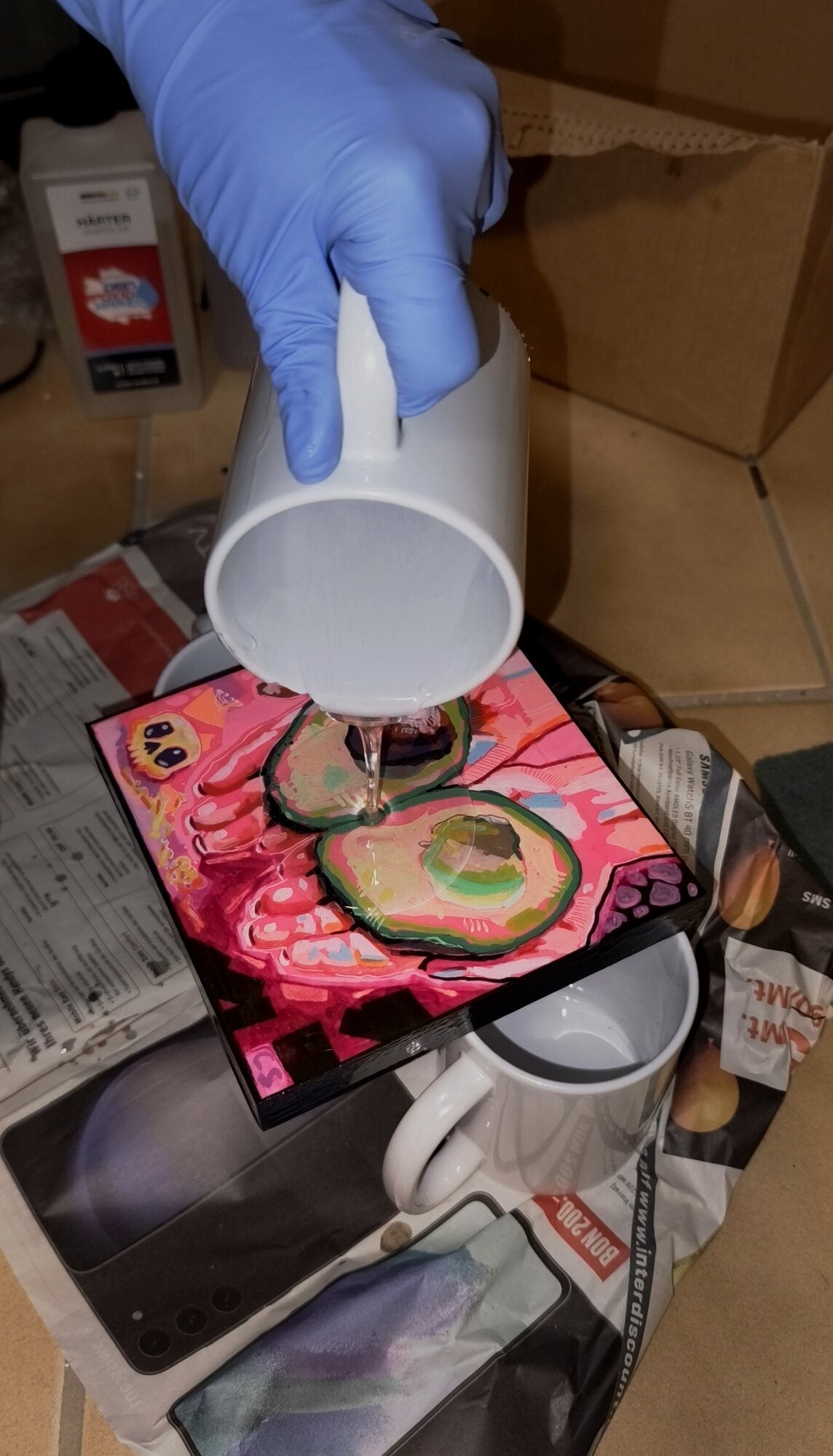
The humour is not there to soften anything. Sometimes the joke is what makes the harder idea land. The resin works the same way from the other direction: everything inside a panel is rotting, melting or getting eaten, while the surface stays sealed and glossy, like the moment got caught right before it changed.
- neon pink
- turquoise
- acid green
- strawberries
- desserts
- animals
- pigeons
- bees
- bones
- skulls
- discarded objects
- handwritten fragments
- humour
- mortality
- comfort objects
Across enough panels, recurring elements stop reading as decoration and start reading as vocabulary. A few examples:


Inside My Studio
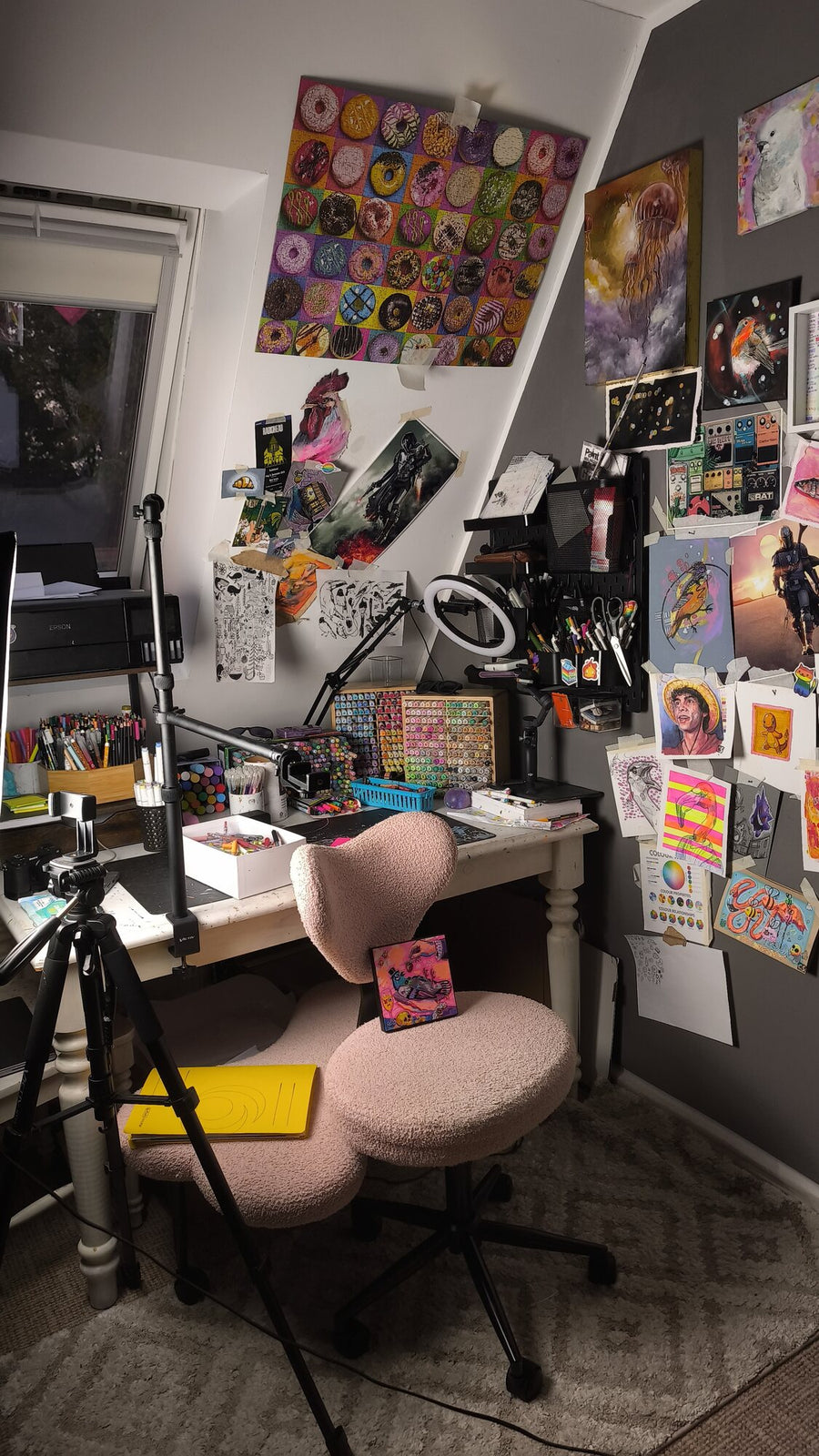
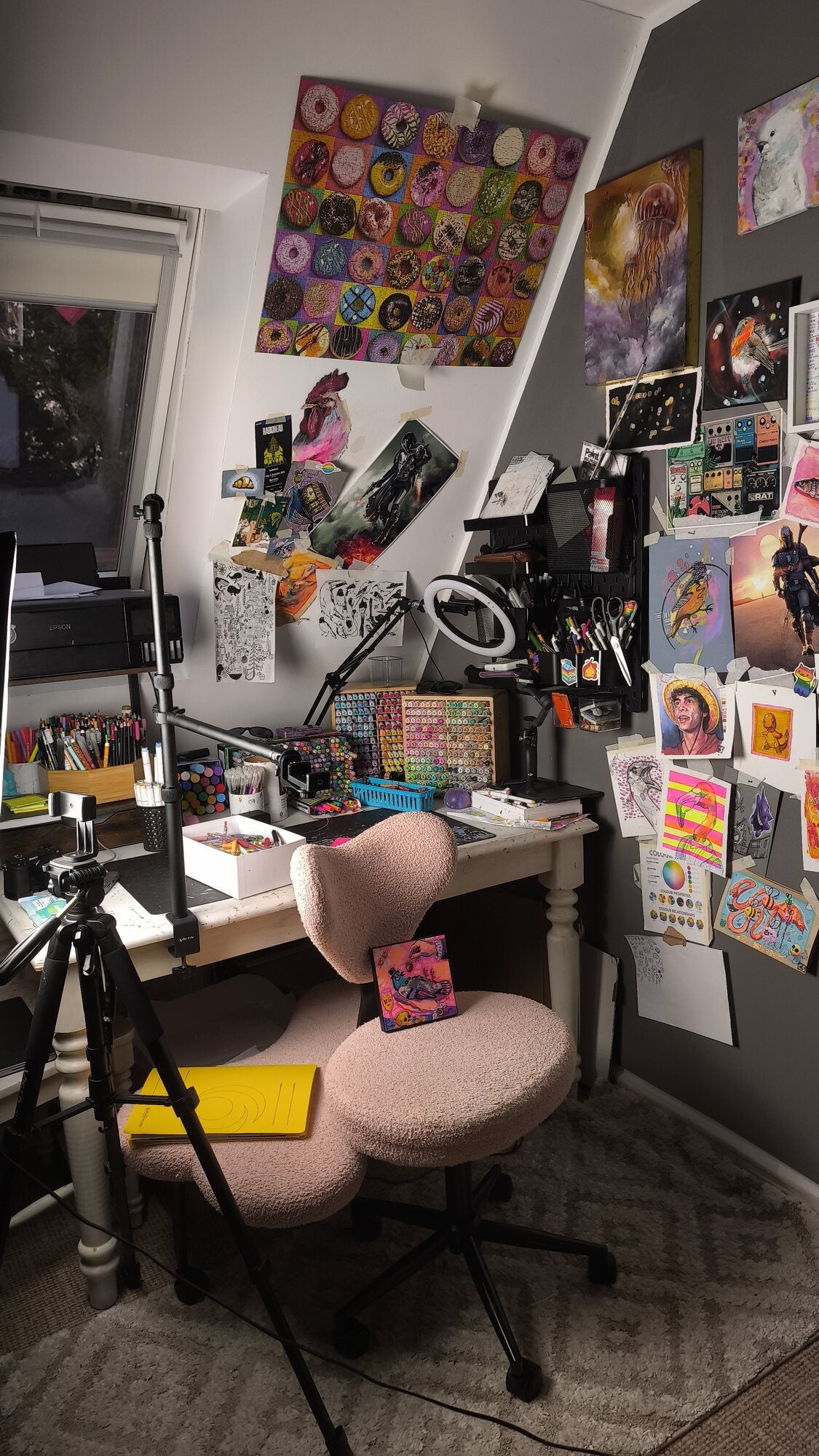
Everything happens in one small room: a desk, a wall of markers sorted by colour family, wood panels in various states of finished, and a lot of reference taped up wherever there is space. It is not a tidy studio and it is not trying to be. Paint, offcuts and half-finished panels are part of how the work gets made, not something to clear away for a photo.
The current materials are acrylic paint, acrylic and alcohol markers, wooden panels and resin. Each panel is only 15 by 15 centimetres, but the format is not casual: the detail is dense and every panel takes real time up close. The resin is doing its own work too, pushing the colour toward artificial and candy-like while sealing the image permanently underneath it.
How My Visual Language Developed
Before Candy Decay had a name, it had a decade of unrelated-looking practice behind it: abstract painting, realistic painting, digital illustration, ballpoint pen studies, straightforward drawing. None of it was wasted. It just had not found a place to live yet.
- Early practice
Abstract & Colour Fields
Loose, spontaneous backgrounds and unplanned colour relationships. This is where the instinct for saturated, artificial colour and gestural mark-making comes from; it still builds the base of every panel.
- Alongside it
Ballpoint & Line
Years of ballpoint pen studies and drawing trained a separate habit: small, controlled, obsessive detail. The tiny line drawings, bones and symbols hidden in Candy Decay's backgrounds come directly from this.
- The longest stretch
Realistic Painting / Traditional Media
A long stretch of realistic painting, mostly in oil, mostly eyes. Getting a reflection or highlight right forces you to actually look: shadow, colour shift, depth, texture. Acrylic, watercolour and gouache came in alongside it. Not one style: learning to see, and what materials could do.
- In parallel
Digital Illustration
Digital work taught composition, graphic separation and how to let colour do the organising: flat shapes reading clearly against each other, even inside a crowded image.
- Now
Candy Decay
These stopped being separate styles and started sharing one surface: loose colour underneath, controlled line on top, observation from years of realistic painting, digital-trained composition holding it together. Not a narrower practice: what happens when the earlier ones stop working alone.
Nothing here is a rejection of the earlier work. Candy Decay is what all of it was pointing toward.
Community
Over time, an online audience of around 17,000 people has formed around this work, and what matters is not the number, it is what grew out of it. People recognise recurring characters, trade theories about the symbols and describe what a specific panel meant to them personally. Art stopped being something made in only one direction.
The audience is not proof that the work is good. It is evidence that a shared visual world has formed around it, one with its own inside jokes and its own memory.
What I Want This Work to Give
I want people to look closely enough to find the stupid joke hiding in the corner of a panel. I want someone to recognise a feeling they had not been able to name. I want the weird, the sensitive and the too much to feel like they do not need hiding.
Candy Decay starts as something private. It becomes something else once another person brings their own memory to it.
About the artist

Paintranger is the artist name of Claudia Schmidt, a mixed-media artist based in Germany and the creator of Candy Decay, an art style she developed by bringing years of experimentation across different media into one visual language. Candy Decay combines saturated colour, cute-creepy characters, scavenging animals, food, bones, discarded objects, handwritten fragments and recurring symbols in densely built compositions, often painted on small wooden panels and sealed beneath resin.
The style grew out of a genuinely varied practice: realistic painting and drawing, including a long period working in oils and repeatedly studying eyes, abstract painting, ballpoint pen fine art and digital illustration. Over time, these practices stopped feeling separate and began feeding the same visual language.
She is neurodivergent and queer, both of which shape how closely and insistently the work looks at detail, repetition, emotional intensity and things that resist tidy categories. A carotid artery dissection in January 2026 sharpened an idea already present in the work: that something ending does not make it meaningless. Sometimes that is exactly what makes it worth painting.
She currently works from a small home studio using acrylic paint, acrylic and alcohol markers, wooden panels and resin, and shares the process with an online community of roughly 17,000 people who have become part of how the work gets read.
Selected information
Press / features
Group exhibitions
- 21.11.2026Melted Hey Drop ExhibitionLüneburg
Contact
PAINTRANGER
Artist inquiries / exhibitions / collaborations