PAINTRANGER
CLAUDIA SCHMIDT
Mixed-Media-Künstlerin aus Deutschland
Ausgewählte Werke, 2026
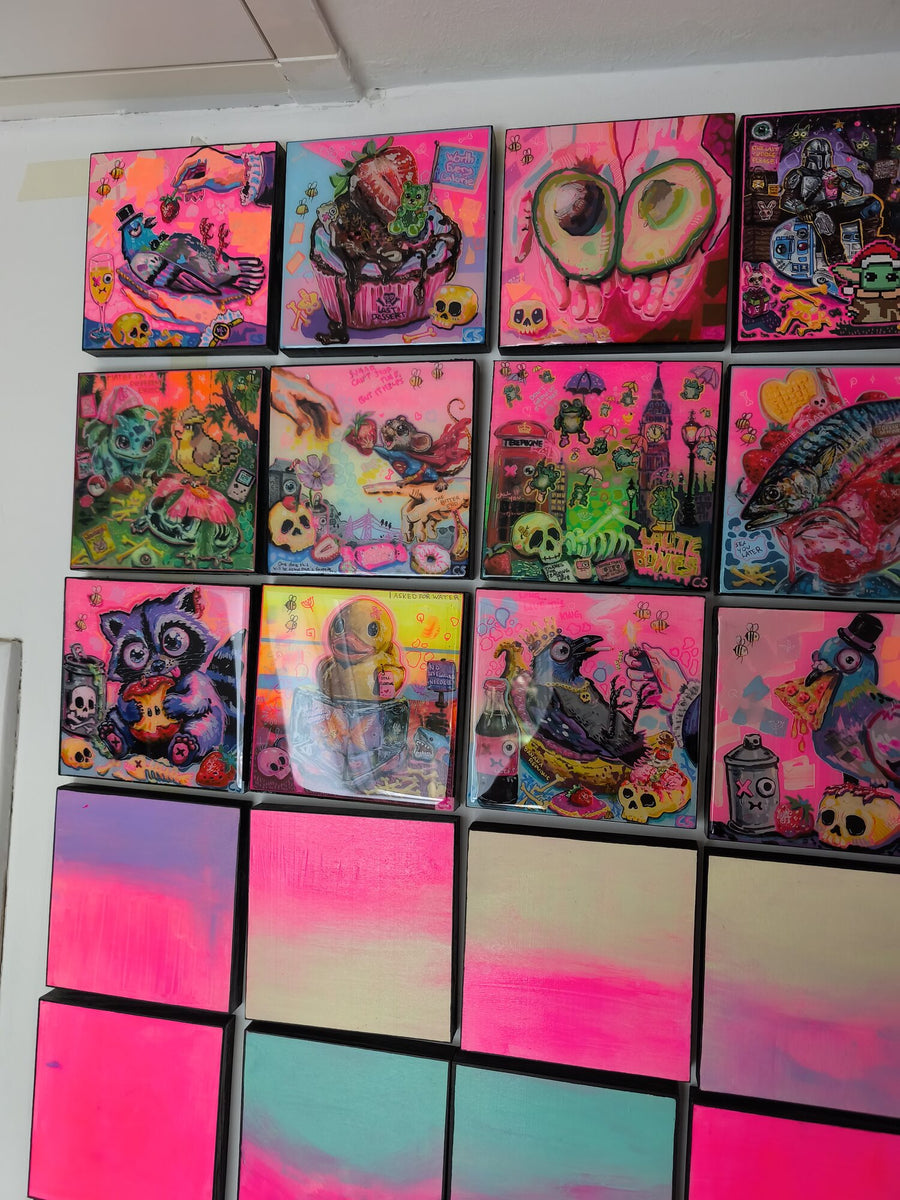
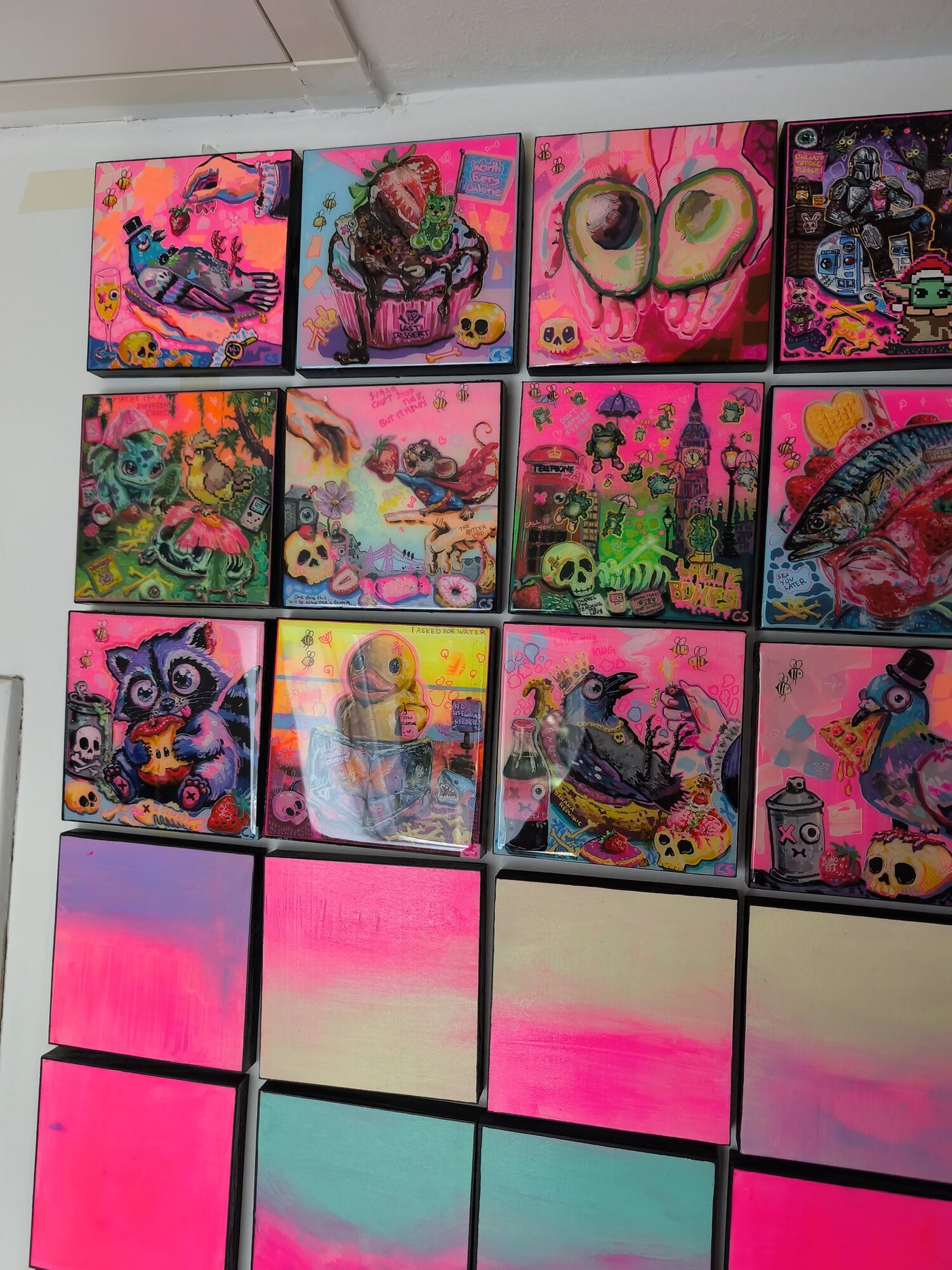
Ich heiße Claudia Schmidt und arbeite unter dem Künstlernamen Paintranger. Meine Arbeit lässt sich im Umfeld von Pop-Surrealismus und Lowbrow verorten – mit intensiven Farben, schwarzem Humor, wiederkehrenden Figuren und Motiven, die zugleich verspielt und düster sein können. Innerhalb dieses Umfelds habe ich mit Candy Decay eine eigene Bildsprache entwickelt, die sich mit dem seltsamen Nebeneinander von Freude und Vergänglichkeit beschäftigt.
Die Arbeiten bewegen sich zwischen zeitgenössischer Malerei, Illustration und figurativer Erzählung. Im Zentrum steht eine einfache Idee: Alles reift, alles vergeht. Und dazwischen gibt es trotzdem viel zu feiern.
Ausgewählte Werke


CANDY DECAY · KUNSTSTIL
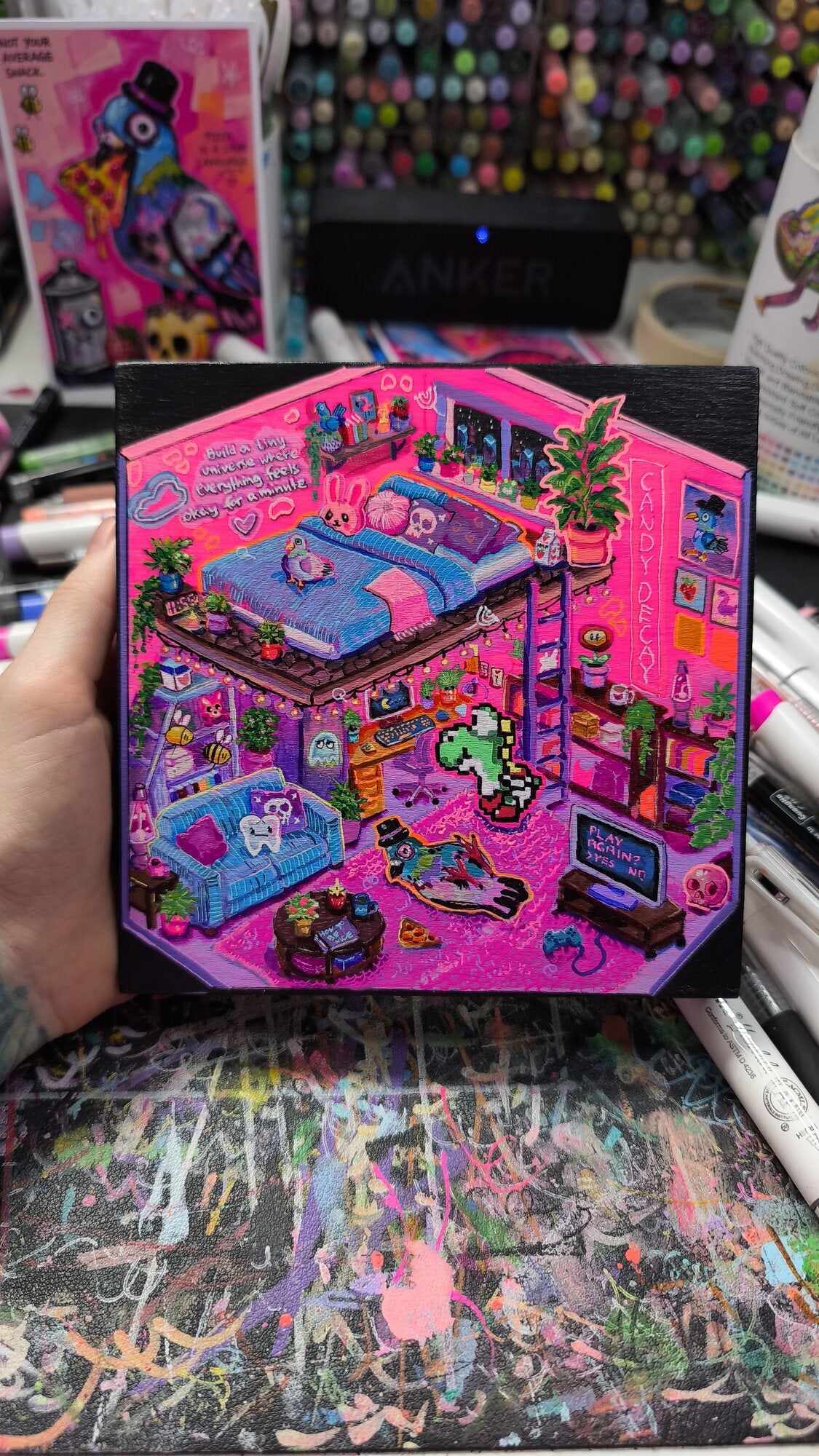
Candy Decay ist ein Kunststil, den ich über Jahre hinweg durch das Experimentieren mit unterschiedlichen Medien und Bildsprachen entwickelt habe. Im Zentrum steht eine einfache Idee: Alles reift, und alles vergeht. Die Bilder halten beides gleichzeitig fest – Genuss und Verfall –, ohne dass das eine das andere aufhebt.


Die Bildsprache von Candy Decay
Candy Decay ist kein Stil, der einfach auf beliebige Motive gelegt wird. Es ist eine Welt, zu der die Arbeiten immer wieder zurückkehren – und jedes neue Panel erweitert sie ein Stück.
Dieselben Figuren und Dinge tauchen wieder auf: Aasfresser, Tauben, Erdbeeren, Schädel, billige Süßigkeiten, weggeworfene Gegenstände. Zusammen sind sie irgendwann nicht mehr nur einzelne Motive, sondern eine eigene Bildsprache – für Vergnügen, das nicht bleibt, und für Zuneigung zu Dingen, die schon anfangen zu vergehen.
Tauben bei einem romantischen Candle-Light-Dinner neben einem Haufen Müll im Central Park. Ein Goldfisch, mitten in der Bewegung in einem schmelzenden Eiswürfel eingefroren. Das sind keine Witze über den Tod. Es sind Möglichkeiten, ihn auszuhalten, solange die Farben noch leuchten.
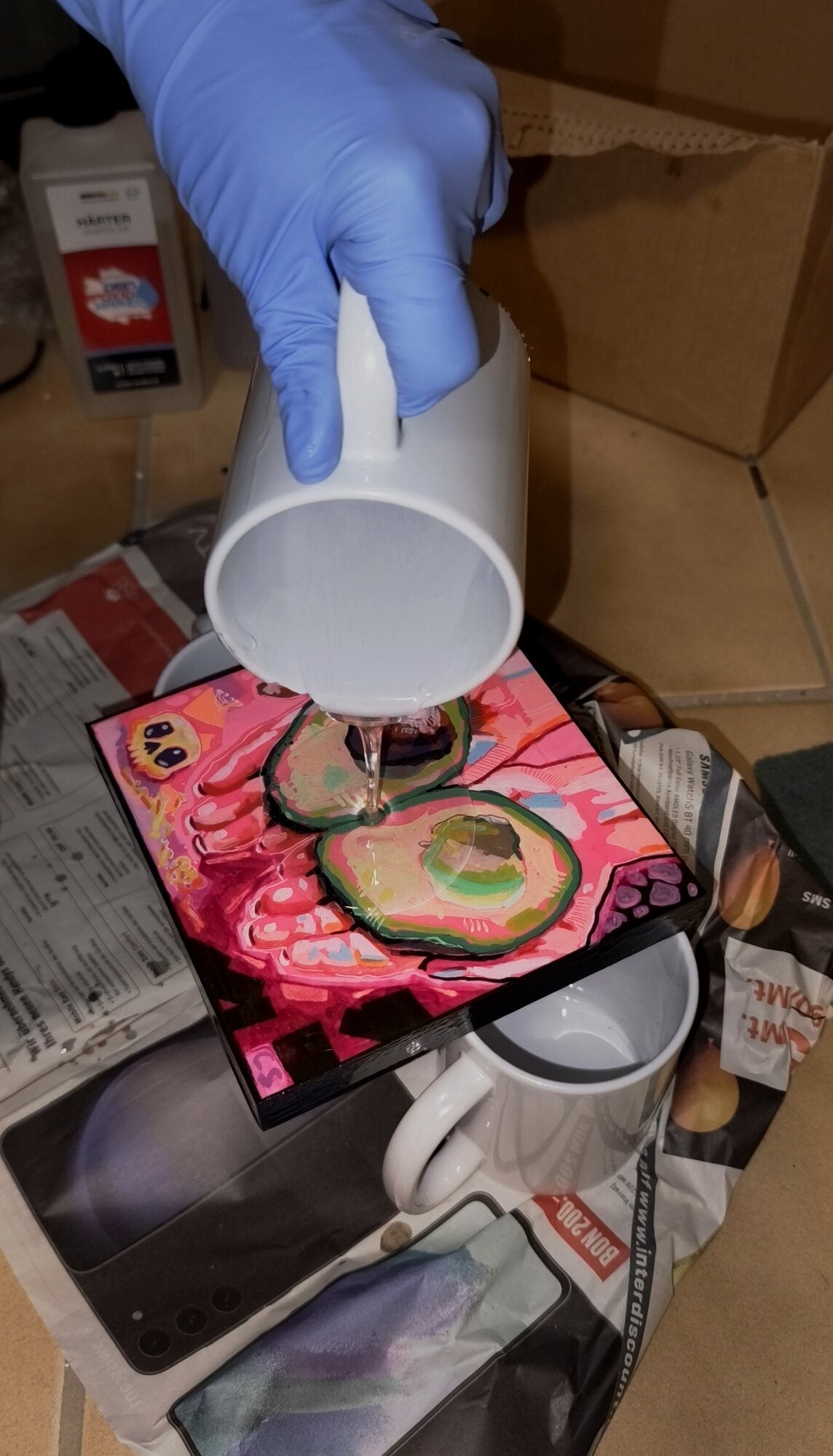
Der Humor soll nichts verharmlosen. Manchmal sorgt gerade der Witz dafür, dass die schwerere Idee wirklich ankommt. Das Resin funktioniert von der anderen Seite ähnlich: Im Bild verrottet, schmilzt oder verschwindet alles, während die Oberfläche versiegelt und glänzend bleibt – als wäre der Moment genau kurz vor seiner Veränderung eingefroren.
- Neonpink
- Türkis
- Säuregrün
- Erdbeeren
- Desserts
- Tiere
- Tauben
- Bienen
- Knochen
- Schädel
- weggeworfene Gegenstände
- handschriftliche Fragmente
- Humor
- Vergänglichkeit
- Trostobjekte
Wenn bestimmte Elemente über viele Arbeiten hinweg wiederkehren, sind sie irgendwann mehr als Dekoration: Sie werden Teil einer eigenen Bildsprache. Ein paar Beispiele:


Im Studio
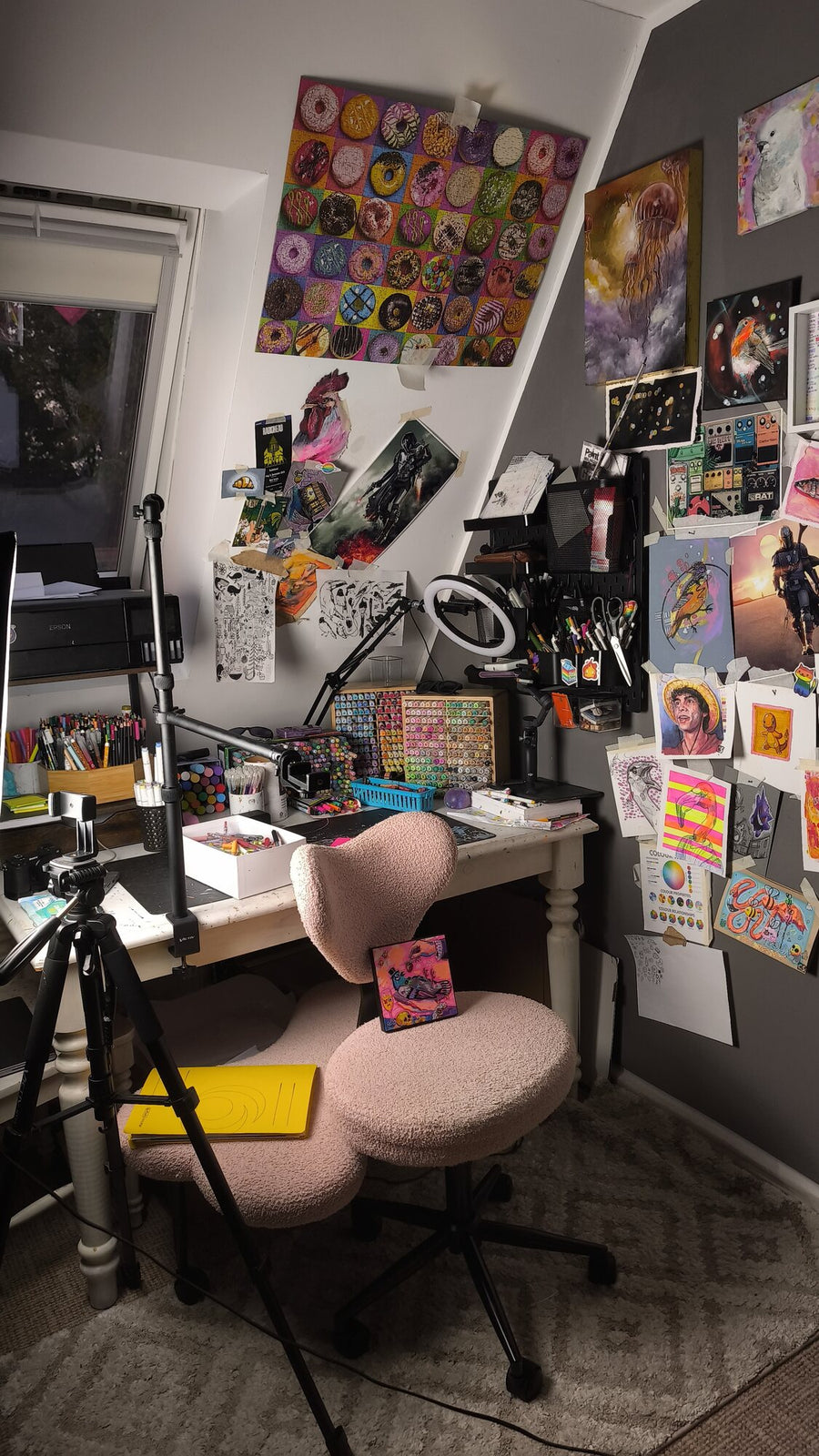
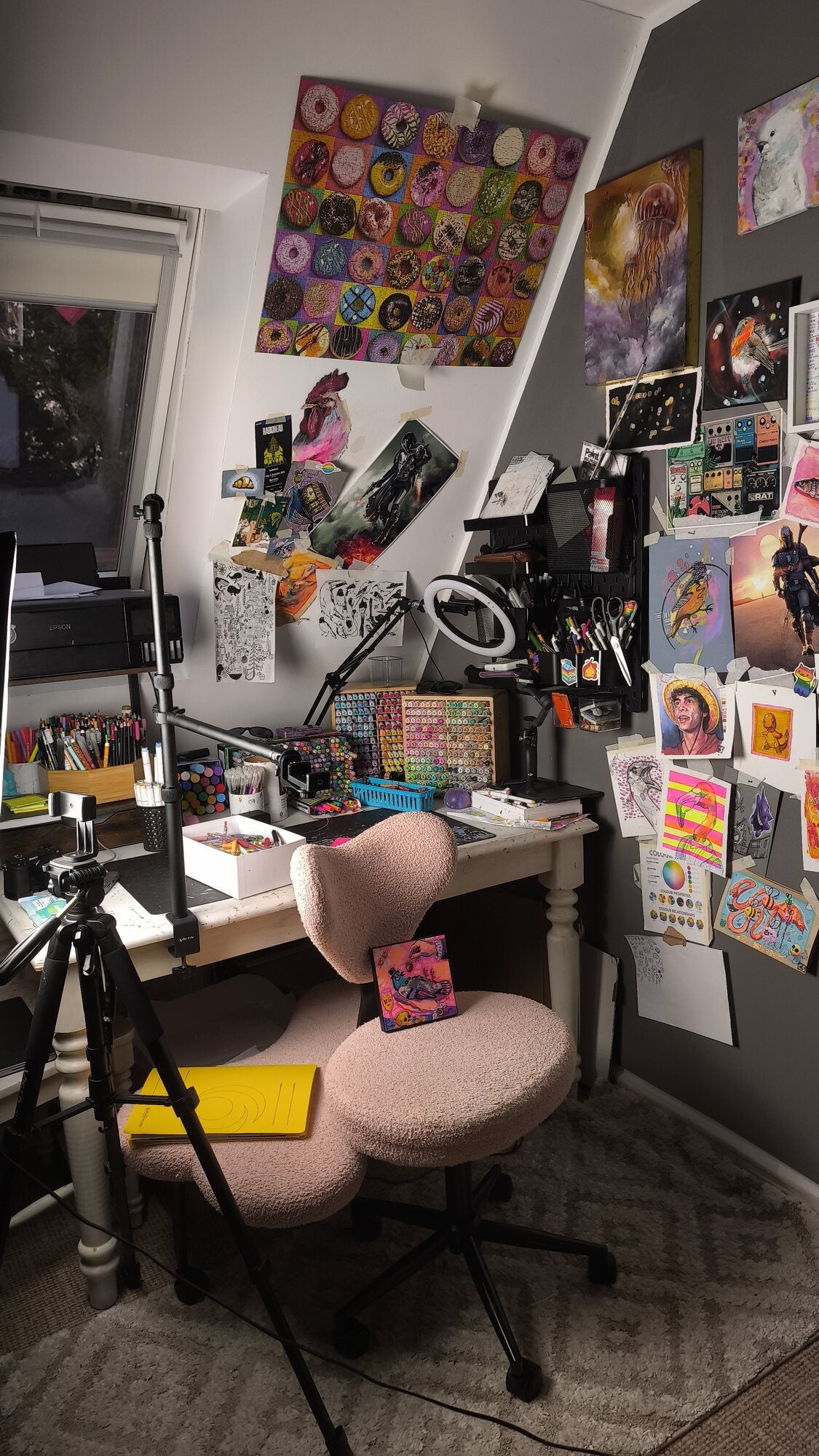
Alles entsteht in einem kleinen Raum: ein Schreibtisch, eine Wand voller nach Farbfamilien sortierter Marker, Holzpanels in unterschiedlichsten Arbeitsstadien und Referenzen, die überall hängen, wo noch Platz ist. Das Studio ist nicht ordentlich – und soll es auch nicht sein. Farbe, Verschnitt und halbfertige Panels gehören zum Entstehungsprozess und sind nichts, was für ein Foto erst weggeräumt werden muss.
Aktuell arbeite ich mit Acrylfarbe, Acryl- und Alkoholmarkern, Holzpanels und Resin. Jedes Panel misst nur 15 × 15 Zentimeter, aber das kleine Format bedeutet nicht weniger Arbeit: Die Kompositionen sind dicht, und aus der Nähe steckt viel Zeit in jedem Detail. Auch das Resin ist Teil der Bildwirkung. Es macht die Farben noch künstlicher und fast bonbonartig und versiegelt den Moment dauerhaft unter einer glänzenden Oberfläche.
Wie sich meine Bildsprache entwickelt hat
Bevor Candy Decay einen Namen hatte, lagen dahinter rund zehn Jahre mit Arbeiten, die auf den ersten Blick kaum zusammengehörten: abstrakte Malerei, realistische Malerei, digitale Illustration, Kugelschreiberstudien und klassisches Zeichnen. Nichts davon war umsonst. Es hatte nur noch keinen gemeinsamen Ort gefunden.
- Frühe Arbeiten
Abstraktion & Farbfelder
Lockere, spontane Hintergründe und ungeplante Farbkonstellationen. Hier entstand mein Gespür für intensive, künstlich wirkende Farben und gestische Spuren – und genau das bildet bis heute die Grundlage vieler Panels.
- Parallel dazu
Kugelschreiber & Linie
Jahre mit Kugelschreiberstudien und Zeichnungen haben eine ganz andere Arbeitsweise geprägt: kleine, kontrollierte, fast obsessive Details. Die winzigen Linienzeichnungen, Knochen und Symbole in den Hintergründen von Candy Decay kommen direkt aus dieser Zeit.
- Die längste Phase
Realistische Malerei & traditionelle Medien
Über lange Zeit habe ich realistisch gemalt – vor allem mit Öl und sehr oft Augen. Eine Spiegelung oder ein Glanzlicht wirklich richtig zu treffen, zwingt zum genauen Hinsehen: auf Schatten, Farbverschiebungen, Tiefe und Textur. Dazu kamen Acryl, Aquarell und Gouache. Es ging dabei weniger um einen festen Stil als darum, sehen zu lernen – und zu verstehen, was unterschiedliche Materialien können.
- Parallel dazu
Digitale Illustration
Die digitale Arbeit hat mir viel über Komposition, klare Flächen und die ordnende Kraft von Farbe beigebracht: Formen müssen auch dann noch eindeutig lesbar bleiben, wenn ein Bild voller Details steckt.
- Heute
Candy Decay
Irgendwann hörten diese Bereiche auf, getrennte Stile zu sein, und landeten auf derselben Oberfläche: lockere Farbe darunter, kontrollierte Linien darüber, genaues Beobachten aus den Jahren realistischer Malerei und eine digital geschulte Komposition, die alles zusammenhält. Candy Decay ist keine Verengung meiner Arbeit – sondern das, was passiert ist, als die früheren Ansätze nicht mehr getrennt voneinander funktionieren mussten.
Nichts davon ist eine Abkehr von meinen früheren Arbeiten. Candy Decay ist vielmehr der Punkt, auf den all diese Wege zugelaufen sind.
Community
Mit der Zeit ist rund um diese Arbeiten eine Online-Community von etwa 17.000 Menschen entstanden. Entscheidend ist für mich nicht die Zahl, sondern das, was daraus gewachsen ist: Menschen erkennen wiederkehrende Figuren, tauschen Theorien über Symbole aus und erzählen mir, was ein bestimmtes Panel für sie persönlich bedeutet. Kunst ist dadurch nicht mehr nur etwas, das in eine Richtung funktioniert.
Die Community ist kein Beweis dafür, dass die Arbeiten „gut“ sind. Sie zeigt vielmehr, dass um sie herum eine gemeinsame visuelle Welt entstanden ist – mit eigenen Insider-Witzen und einer eigenen Erinnerung.
Was ich mit dieser Arbeit weitergeben möchte
Ich möchte, dass Menschen lange genug hinschauen, um den albernen Witz zu entdecken, der irgendwo in einer Ecke des Panels versteckt ist. Ich möchte, dass jemand darin ein Gefühl wiedererkennt, für das vorher die Worte gefehlt haben. Und ich möchte, dass das Seltsame, das Sensible und das Zuviel sich nicht verstecken müssen.
Candy Decay beginnt als etwas Persönliches. Sobald jemand anderes die eigene Erinnerung mit hineinbringt, wird daraus etwas Neues.
Über Paintranger

Paintranger ist der Künstlername von Claudia Schmidt, einer Mixed-Media-Künstlerin aus Deutschland und der Schöpferin von Candy Decay. Der Stil entstand aus jahrelangem Experimentieren mit sehr unterschiedlichen Medien, die sich nach und nach zu einer gemeinsamen Bildsprache verbunden haben. Candy Decay kombiniert intensive Farben, süß-unheimliche Figuren, Aasfresser, Essen, Knochen, weggeworfene Gegenstände, handschriftliche Fragmente und wiederkehrende Symbole in dichten Kompositionen – häufig auf kleinen Holzpanels gemalt und unter Resin versiegelt.
Diese Bildsprache ist aus einer bewusst vielfältigen künstlerischen Praxis gewachsen: realistischer Malerei und Zeichnung, darunter eine lange Phase mit Ölmalerei und immer wieder Augenstudien, abstrakter Malerei, Kugelschreiberarbeiten und digitaler Illustration. Mit der Zeit fühlten sich diese Bereiche nicht mehr getrennt an, sondern begannen, sich gegenseitig zu beeinflussen.
Sie ist neurodivergent und queer. Beides prägt, wie intensiv sich die Arbeiten mit Details, Wiederholung, emotionaler Stärke und Dingen beschäftigen, die sich nicht sauber in Kategorien einordnen lassen. Eine Dissektion der Halsschlagader im Januar 2026 hat eine Idee geschärft, die bereits vorher in den Bildern steckte: Dass etwas endet, macht es nicht bedeutungslos. Manchmal ist genau diese Endlichkeit der Grund, warum es sich zu malen lohnt.
Heute arbeitet sie in einem kleinen Studio zu Hause mit Acrylfarbe, Acryl- und Alkoholmarkern, Holzpanels und Resin und teilt den Entstehungsprozess mit einer Online-Community von rund 17.000 Menschen, die inzwischen selbst Teil davon geworden ist, wie die Arbeiten gelesen werden.
Ausgewählte Stationen
Presse / Features
Gruppenausstellungen
- 21.11.2026Melted Hey Drop ExhibitionLüneburg
Kontakt
PAINTRANGER
Anfragen · Ausstellungen · Kooperationen